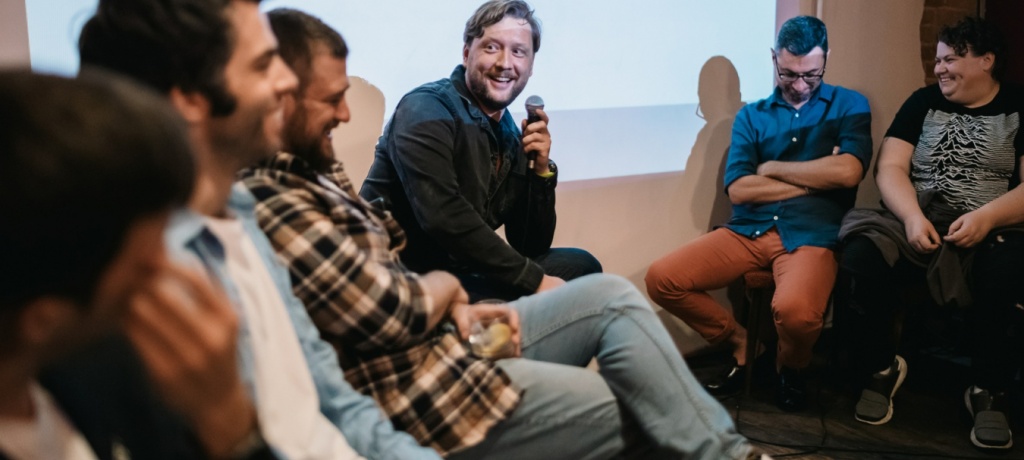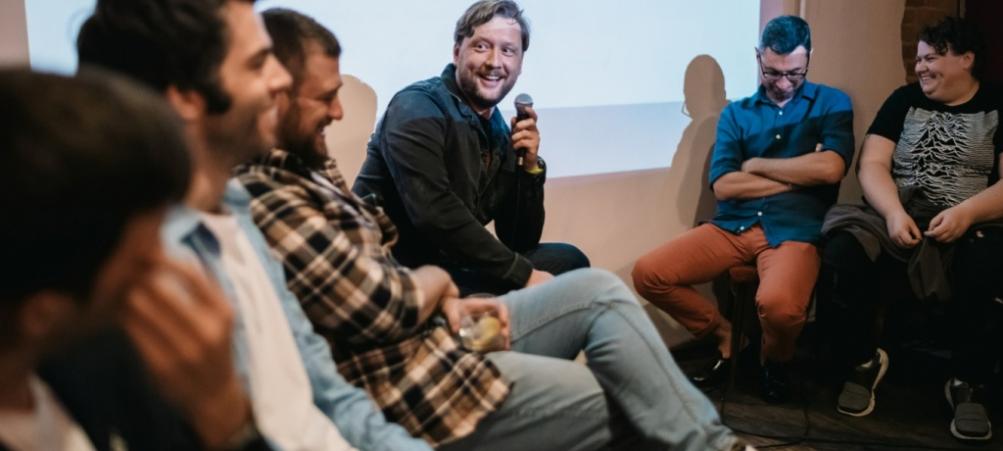
Russia, like the whole world, is experiencing a real boom in festivals. On September 5, at the Moscow bar "Rovesnik" as part of the Drink&Talks event from Eventum Premo, speakers - festival organizers and brand representatives - talked about the reasons for the popularity of festivals, their organization and sponsorship integrations, and also discussed the future of the domestic festival industry
Despite the youth of the industry, Russia has many festivals for every taste and budget - both mass and niche. Those eager to pay tribute to Russian rock go to “Invasion” year after year, fans of electronic music meet like-minded people at Alfa Future People, representatives of street subcultures at Faces&Laces, and connoisseurs of contemporary art at the Forma festival.
Festival visitors have different goals: for some, this format of events replaces a two-week vacation, others are engaged in networking, and others continuously record everything that happens, creating content for their profiles on social networks. Organizers and brands, in turn, look closely at each other, planning future collaboration strategies and developing new formats.
Every year the number of players in this market is increasing. As the experience of the speakers at the Eventum Premo event showed, the mutual integration of brands and festivals occurs not only and not so much for the sake of money, but because of the semantic component.
Alexander Shumovich, managing partner of Eventum Premo, outlined the main theses of the modern festival world:
- Since people are surrounded daily by rationality, numbers and all sorts of algorithms, the main currency at the festival is emotions;
- The main task of festivals is to grow “their” audience: to make sure that people attend the event not because of the headliners, but for the special atmosphere, that is, to create a powerful festival brand;
- The three most effective sponsorship integration strategies are:
- Festival brand (for example, Alfa Future People or Bosco)
- Your own space inside the festival (Amex House, Heineken House)
- Creation of a product/collection specifically for the festival (H&M loves Coachella)
Another way that seems quite successful is digital activities around the festival.
Alexander Shumovich, managing partner of Eventum Premo:
A good product doesn’t surprise anyone these days. Everyone has good phones, good TVs, and so on. Nowadays, brands are more likely to play in the territory of emotions. We, in turn, need to convey the style and atmosphere. This is partly why people stop collecting things - they start collecting experiences. This is one of the factors behind the rise of festivals, and brands are well aware of this.
It is very important to create a community of people who share the values of your festival. It is through them that the festival brand is built. Today there are such communities, but they are not represented in the volumes that we expect. And this is one of the tasks that brands and organizers should work on.
For brands, the festival is a way to combine their values with the values of the festival. AND, Once you have coverage, move forward with your marketing.
One of the problems is that brands are strictly focused on numbers and try to increase KPIs every year, but with festivals this is not the right approach. You need to count numbers, but not focus on them.A festival is a journey, and the key to a good trip is genuine emotions.
Borislav Belukhin, Xiaomi:
The discrepancy between reality and the initially stated KPIs often upsets brands, but sometimes without reason.
We launched a new smartphone, the Mi A3, which is quite niche. And the invitation of colleagues from AFP overlapped with our desire to somehow announce this new product in an unusual way. We organized a launch for a large audience at AFP.
So, we simply initially understood that the declared 50 thousand people at AFP would not happen. And yet, the integration was successful. There is no question about whether to integrate into any festival next year: most likely we will!
Organizers of some of the most successful domestic festivals shared their views on how to work with brands and audiences.
Andrey Morozov, Signal:
One of the new trends is that people have started buying festival tickets in advance. This is something that didn’t exist just 5-6 years ago.
Yuri Kassin, “Form”:
One quote I really like is “Brands must become cultural agents.” Why? Everyone talks about how media is all about reach. But in reality, media is more about culture.Today's youth go to festivals with the goal of exploring art. This is the main trend. Therefore, we cannot talk about numbers, we need to talk about cultural influence.
Yuri Subbotin, Faces&Laces:
Our goal was never to get a huge reach - we wanted to gather people who are interested in learning something about art and some new products.
If previously Faces&Laces was a completely free event, then this year we decided to introduce paid entry - and we did not regret it. On the contrary, we saw that 90% of the audience came to us, they just came to our brand. For us it was an interesting transformation, which we were pleased with.
We aim to gather an audience that will come not only to the line-up, but to the whole atmosphere as a whole. This year we had several experiments at once - moving from Gorky Park and paying entrance. Not all brands were willing to take the risk. But, for example, Nike and Puma, who have always been with us, supported us and implemented cool projects at the new site.
For some brands, our transformation, on the contrary, became an incentive to participate. For example, for JBL, the mass format that we did in Gorky Park ceased to be relevant, and before they met were skeptical. But they ended up becoming musical partners and built a green oasis with a real lawn and tropical plants in the middle of a concrete parking lot and were very pleased with the result.
Nick Babin, Chess&Jazz:
Our sponsor is Porshe, which is a premium brand. They don't need an audience of 100 thousand. Let it be better if there are 5-9 thousand people who can buy. The fact that people are passionate about festivals is a good thing. The cultural background is growing.
We hold our festival a little differently - we promote it abroad. Already held in Singapore and Kazakhstan.
The future lies with niche festivals, because lifestyle festivals with 50 thousand people are similar to each other, only the lineup is different, while niche festivals have a concept. Ours is based on a sense of style and intelligence.
Yuri Kassin, “Form”:
I, as a marketer, would not work with mass festivals, because this is a story of cooperation for one year. The strategy now for brand managers is to try out as many festivals as possible. Why is this so? Yes because The market is completely new, and brand managers don’t yet understand which festivals suit them best.
I believe that the festival and the brand should collaborate in the long term. In this case, festivals try to come up with a concept that will suit brands in advance; There is some kind of synergy.
I even have a list of which brands, in my opinion, should integrate into which festival!
Irina Slovokhotina, “Wild Mint”:
I don’t really believe that the future lies with niche festivals. This is a temporary phenomenon, which is dictated by a boom in something new, especially considering the alarming situation in our country.
It's like small startups that soon, in a few years, they will simply turn into big festivals. I very much support Yuri Subbotin, who calls his festival an exhibition and keeps the concept, he understands where this festival is leading.
I really don’t like that now they are trying to push the word “festival” everywhere. What used to be called a “session” or “party at the hut” is now called a festival. Everywhere you look there is a festival: a fish festival in Moscow, a shish kebab festival, a fur and fur festival, a cucumber festival in Suzdal - in general, the very word “festival” has been devalued.
All cultural events that are presented here are necessary and important events of the city. However, if they don't scale, they won't last long.
Yes, it is very important to bring an art component, and at the same time it is important to bring indicators and satisfy the interests of partners.
The most important value of the festival is our audience. These are not just random people who came to live with us. These are not just people who have nothing to do and go to the Tula region to get wet in the rain. 50% of these people are our regular audience.
A festival is when you come not to get drunk, but to have a great time. You know that you are safe and comfortable there. This is an alternative to a mini-vacation.
We, as festivals, don't fight each other. We fight for the audience, not among ourselves.
When we attract a sponsor, it is primarily not so much for the sake of money as for the sake of content and image. We are for partnerships, where we are for exchange, for mutually beneficial cooperation.If something contradicts our concept, then we refuse money.
For example, a year ago we had a case, we had been negotiating for a long time with one brand, we really wanted to collaborate, and all the interests of us and the brand coincided, but the brand really wanted to integrate its ambassador into the music program of the festival. But the festival’s musical program and format did not allow us to take this artist. We might agree for show's sake to get a sponsorship budget. But we consider it disrespectful to stage a performance at 12 noon in front of an empty field, just for the sake of a photograph and publication in the media. Therefore, the cooperation did not work out. But we were honest, and this allowed us to maintain a good relationship.
Adrian Khmelnitsky, “Wild Mint”:
The issue of site quality is important. If we see that our audience already exceeds 25 thousand people and We understand that it will be cramped and uncomfortable - we will close sales.
The only festival that exploded on the market this year is Pain. We have been watching him since his first appearance. This year they made a sharp jump, this is even noticeable from the media. But still, this is a festival for young audiences, in my opinion. It is unlikely that in a few years we will see office workers there—the organizers have chosen a different positioning path. And this is their difference.
We have changed our communication - if previously “Wild Mint” was considered an event dedicated mainly to ethnic music, now we are actively experimenting with the musical component, attracting both famous Russian and foreign pop stars, as well as emerging performers.
In fact, festivals, by attracting sponsors, buy some kind of expertise for themselves.
Conclusions
Numbers fade into the background
There is a transition from quantity to quality: it no longer matters how much traffic a festival has - what matters is who exactly came to the event. Now everyone is working on loyalty, and brands understand this. It is also important for them to attract an audience that shares their values.
People are increasingly willing to spend more on experiences rather than on things. The festival must have a story, a concept and people who carry this message.
Paid entry only has a positive effect on the event
Only “your” people come - those who share your ideology and meanings. The viewer comes for the new experience and culture that the festival conveys. Paid entry attracts a community. People pay not only for the line-up, but also for the atmosphere.
The brand and the festival must work with each other for a long time
It is very important to understand each other's needs and align with your culture and community rather than collaborating with everyone. Brands are associated with festivals and vice versa.
The future lies in experimentation
Brands shouldn't be afraid to take risks. New culture and art, mixing styles and subcultures is the border with experimentation. If there is no experimentation, the public eventually becomes bored.People want not only content, but also interdisciplinary performances.
The focus is shifting to new names and unique experiences, and brands are receiving new content for further use and scaling.
In a commercialized media stream, the role of festivals is content around which brands can build their communications, in tune with the aesthetics and audience of festivals. Strong, sustainable festivals are built around people with principles, enthusiasts of their theme, who adhere to the chosen concept. This allows you to create a loyal festival audience that brands value so much.