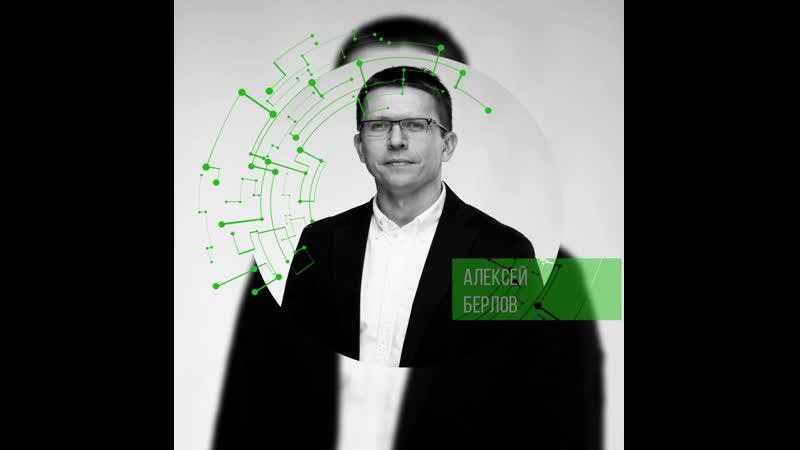
The commercial events market has changed dramatically in 2020 due to anti-Covid restrictions. At the same time, few people have yet learned how to create fun events online: simply transferring familiar offline formats to online does not work, and broadcasting a speaker’s speech is not yet an event. Aleksey Berlov, partner of the event agency Eventum Premo, tells how to organize a high-quality event online.
How 2020 went for the event industry
In the spring, the market was empty, events were canceled or postponed indefinitely, and both agencies and clients were in panic. Then the first experiments began in moving events online: MTS Live, the Bi-2 concert, and VK fest took place. There was hope, the audience reacted actively. In the summer, when everyone realized that the pandemic would not end quickly, the creative process began: the search for new formats, platforms, scenarios and technologies.
Not all events were equally successful in adapting to new formats, but some were quite successful. Events with “useful” content (that is, all business events) are easily transferred online. Events “for communication” (all internal corporate events) are obviously more complicated: they need other technological platforms where different formats of communication can be implemented (chat rooms, video calls, video chats for several people).
The first wave is a draft and empty streets of the event market. The second is a lot of work, tenders and projects.
Can we say that the market has returned to last year's figures? No. Many event agencies are formally or informally closed; some operate without a permanent office in the format of teams of freelancers. According to our data, the market volume has decreased by at least half, and the average budget of an online event is at least two times lower than usual. But this is no longer zero, as it was in the spring. And the situation is changing.
Big questions of the season: Can online events even exist? Why is a broadcast called an online event? What new competencies do we need?
These are the conclusions we have come to this year.
Conclusion 1
A broadcast is not an event yet.
If you simply attach an online broadcast to an event, no online event will work. People won't want to watch it unless you have the resources to force them to.
Why doesn't this work? Because participants/viewers behave differently online. More distracted attention, more temptations, fewer barriers to switching. Offline events are hindered by time spent on travel, the boss’s gaze, obligations to clients, or positive stimuli in the form of random pleasant meetings.
Speakers also value speaking online less: in our experience, everyone is less prepared for online events. Moreover, their audience is often much larger: an online conference can easily gather several thousand people, which in the physical world would be very expensive.
Can this change? Already changing. Online events have their own hygiene, rules and rituals. Online events are becoming equipped with new technologies that allow people to be more involved and create new experiences for them.
Conclusion 2
Competitors of online events - bloggers and YouTube shows
By going online, events compete not with other events, but with the best examples of online content. You can’t move or screw anything anywhere—you have to re-develop new formats for the new normal.
For example, the format of an online show is much more organic than the format of an online conference or online presentation. The team that previously organized large-scale events lacks many competencies here.
What exactly has changed? Events are becoming shorter: performances last ten minutes, and the total duration is no more than three hours. Presenting content is more entertaining and easier.
Other writers and other directors are needed here. What we love about ordinary events: insights at the cocktail table, professional jokes on the sidelines, emotions from the collective experience of the action, aromas, taste. Online we only have a window with changing pictures, and these pictures should change so dramatically that a person does not switch.
We tend to focus on complex technical solutions - it's honestly easier. But in online events, the script and creativity are more important than the level of technology. The technique does not allow you to maintain attention for more than ten minutes.
Conclusion 3
Offline events are the new luxury
The best option is a hybrid event: a small offline event for a VIP party (50-100 people) and an online version for a wider audience. On the one hand, budget optimization, on the other, the most important ones are happy. Many of our clients say that this is the optimal format for them, and plan to continue organizing such events when restrictions end.
Offline events are turning into real luxury. Just like in the education market, offline learning is turning into a luxury.
Conclusion 4
Online, as well as offline, it is important to choose the right platform
The format of events is changing, but a platform, even if it is virtual, still needs to be chosen.
Among these platforms there is no best one - you need to choose the optimal one depending on your tasks. All agencies recommend different solutions for a specific project.
Conclusion 5
The quality of online events determines the ease of communication
What are “online events” and do they exist? What does online content usually not have, but what can online events have? Firstly, different options for interactive engagement: tests, quizzes, surveys, prizes. Secondly, online communication is everything that allows you not only to watch, but also to communicate.
Modern event platforms allow for many ways for participants to video communicate with each other and with speakers. For example, you can join a cocktail table, a small group of participants who discuss a topic of interest to them during breaks from the event. Or walk around the virtual exhibition and, if you are interested in the stand, contact a company representative via video call. Or ask a question to the speaker after his speech: if he confirms the dialogue, you are connected via video link, and the rest of the participants can see and hear your conversation.
There are so many online events going on these days with performances that are essentially just pre-recorded videos. I hope that this is still a temporary phenomenon and that “live” will return to events.
Conclusion 6
The demand for studios has increased, and so has their quality.
Any virtual platform has a physical avatar - a studio. Studios are also different - and have evolved greatly over this year. From the simplest, with physical decorations, to a virtual space based on LED screens, cameras with tracking and virtual servers - this is called an XR studio.
The last solution is as comfortable as possible for the speakers (they see a picture on the screen) and impressive for the audience: the virtual world around the speakers has no boundaries at all and is absolutely seamless. This is also the most expensive solution. You can see him in Katy Perry’s Daisies video or at the big presentation of the updated Sberbank.
The budget for regular studios starts from 500 thousand. rubles The budget for an XR studio is from several million.
Conclusion 7
Bloggers are the new stars of the event market
Previously, the stars were guest speakers or musicians - now they are bloggers. Why did this happen? Bloggers are those who have online authority and people come to them. They know their audience and what will appeal to them and can share it with brands.
Conclusion 8
Talents change contractors, and agencies change their structure
Current changes will influence which agencies will be in demand in the future - this is the most long-term trend.
Firstly, in recent years the boundaries between specializations within the team, offline and online, event departments, PR, digital, and so on have been blurred. This division is very outdated, and with such a structure it is difficult to make an integrated project. More often than not, when one team comes up with content in a vacuum and then hands it off to another team that has to do the promotion, it doesn't work.
Creative and content should be organically connected with promotion channels. Creative and channel are two sides of the same phenomenon.
Secondly, if previously agencies were a team that, on the one hand, works with the client, and on the other, with contractors, now “talents” have appeared in this scheme in a broad sense. The talent category includes bloggers and any other creative content creators.
The art of dealing with talent is very different from working with contractors. With the latter, familiar business relationships work: there is a task, there are options to solve it with different budgets and deadlines. When everyone agrees, the implementation process begins.
Formally, contractual relationships also work with talents, but that’s where the similarities end. They need to be lured, motivated, persuaded and listen well. After all, they are the ones who know their audience best, which is what you need.
The agency of the future is a special group of people who know talent and know how to work with them. This is a team in which offline and online work together.
Resume
Events are being held, average budgets are growing. But their format is radically different from what we started with.
Let's assume that the vaccines have arrived and the epidemic is over: will there still be online events? Or will we return to the “classics”? No one can say for sure right now, but there are two formats of events that seem to be with us for a long time.
1. Hybrid events with a small offline audience and a main online audience. This format allows you to simultaneously hold an event inexpensively and fulfill business objectives.
2. Massive business events for several thousand people. Some of our clients claim that they will remain online with this category of projects. Thanks to the development of technology (both studios and platforms), the experience of participating in these events can really be remembered for a long time.
In the near future, specialized platforms will allow the client to independently launch their events for a nominal fee, and this process will become streaming. This will reduce the barrier to entry, and there will be more online events. When physical events are allowed, it’s unlikely that anyone will refuse a new opportunity that can radically increase the project’s audience.
https://incrussia.ru/understand/online-events/